
Your Local, Reliable Freight Operator
The Durbin & Greenbrier Valley Railroad (DGVR) continues to uphold its long-standing mission of providing dependable, customer-focused freight service across its expanding West Virginia and Virginia rail network, even as modern shippers face rising fuel prices, limited trucking capacity, and tighter operating budgets. Rail freight remains one of the most cost-efficient and energy-efficient modes of transportation available, and DGVR has broadened its operations—most notably through the West Virginia Central Railroad (WVC) and the Shenandoah Valley Railroad (SV)—to meet the evolving needs of industries throughout both states.
On the WVC, DGVR offers on-demand freight service between Tygart Junction and Elkins, West Virginia, with connections to the CSX Transportation (CSXT) network via the Appalachian & Ohio Railroad (AORR). This corridor supports transloading, industrial switching, and the movement of commodities such as timber, aggregates, and manufactured goods. Across the state line, the SV provides a vital 20-mile short line link between Staunton and Pleasant Valley, Virginia, interchanging with CSXT via the Buckingham Branch Railroad (BBRR), and Norfolk Southern (NS) to give shippers competitive routing options.
Across all its properties, DGVR provides tailored logistics solutions including: cost-control planning, car-supply management, and real-time coordination between shippers and receivers. Trial shipments, loading assistance, and rail-integration guidance help new customers adopt rail freight with confidence. Through multiple interchange points on both railroads, DGVR connects clients to the nationwide rail system, enabling market reach across the Western U.S., Canada, and Mexico. With its flexible services and local, hands-on management, DGVR consistently strengthens freight options throughout the region.
We will make the extra effort to exceed your expectations. Contact us to discuss rates and freight transit times today!
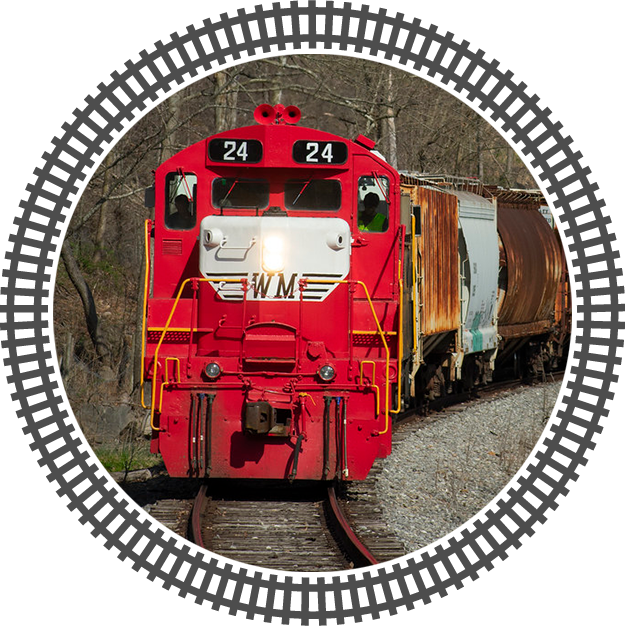
WEST VIRGINIA CENTRAL
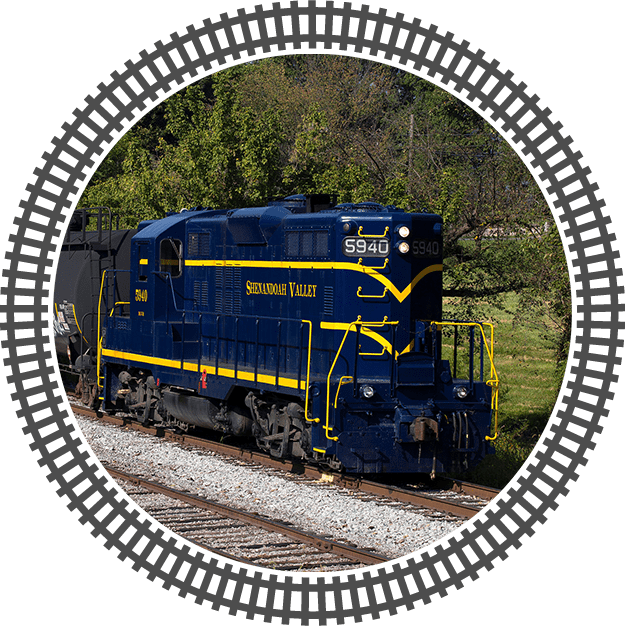
SHENANDOAH VALLEY
Freight Car Versatility Options
Both the West Virginia Central and Shenandoah Valley Railroads operated by the DGVR can accommodate a wide range of modern freight car types, giving shippers exceptional flexibility in moving diverse commodities. These lines regularly handle centerbeam flatcars for lumber, covered and open-top hoppers for aggregates, agricultural materials, and coal, as well as boxcars for lumber products and general merchandise. Tank cars carrying fuels and industrial liquids, gondolas for scrap and lumber, and specialized high-wide or dimensional loads can also be moved efficiently. Combined with multiple Class I connections, this versatility allows DGVR to serve industries of nearly every size and sector.
Centerbeam Flatcars
A centerbeam flatcar is one of the most versatile and efficient railcars for transporting lumber and other bundled building materials. Designed with a central vertical truss, it provides balanced weight distribution, allowing products such as dimensional lumber, plywood, oriented strand board (OSB), wallboard, and pressure-treated wood to be securely strapped on both sides. Its open, unobstructed deck maximizes loading space while ensuring quick access for forklifts at mills, transloading sites, and distribution yards. Because the car must be evenly loaded on each side, centerbeams promote safe handling and reduce shifting during transit. Their high capacity and rapid loading/unloading make them essential for modern forest-products logistics.

Covered Hopper Cars
A covered hopper is an extremely flexible freight car designed to efficiently transport dry bulk commodities that require protection from moisture and contamination. Its gravity-fed unloading system makes it ideal for moving commodities such as fine aggregates, agricultural materials, as well as certain grades of coal and carbon products. Different compartment and hatch configurations allow quick loading at elevators, mines, and processing plants, while bottom gates enable fast discharge at terminals and customer facilities. Pressure-differential covered hoppers expand this versatility further by enabling pneumatic unloading of fine powders giving shippers safe, enclosed handling for even the most sensitive bulk materials.

Open-top Hopper Cars
An open-top hopper car is highly useful for hauling aggregates due to its rugged design, high capacity, and efficient unloading features. Built to carry materials such as coal, sand, crushed stone and other various aggregates, these cars allow rapid loading from conveyors or front-end loaders without the need for roof clearance. Their bottom discharge gates enable quick, controlled unloading directly into pits, hoppers, or trackside stockpiles, minimizing handling time and labor. Open-top hoppers can also withstand abrasive materials and heavy impacts, making them ideal for continuous industrial use. Their durability and simplicity make them essential for construction, mining, and infrastructure projects.
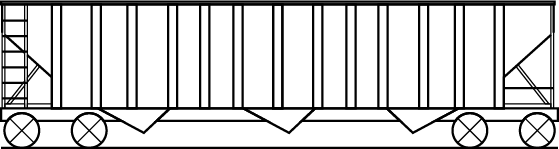
Boxcars
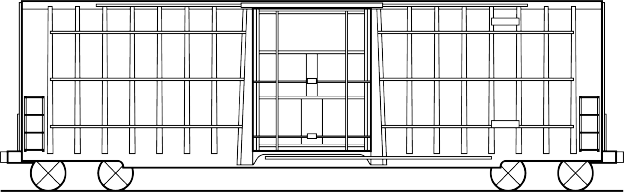
A boxcar is one of the most recognizable freight cars in rail transportation, offering enclosed, weather-protected space ideal for hauling both lumber products and a wide range of general merchandise. For forest-product shippers, boxcars efficiently carry packaged lumber, plywood, engineered wood, doors, and finished building materials that require shielding from moisture. Their large interior volume and wide door openings allow easy forklift access for palletized goods, appliances, paper products, food items, and consumer merchandise. Because boxcars safeguard cargo from shifting, theft, and the elements, they are well suited for long-distance shipments. This flexibility makes them indispensable across manufacturing, retail, and distribution industries.
Tank Cars
A tank car is a highly adaptable freight car designed specifically for transporting fuels and industrial liquids safely and efficiently. Built with a cylindrical, pressurized or non-pressurized steel body, it can carry a wide range of commodities including diesel exhaust fluid (DEF), liquified petroleum gas (LPG), chemicals, liquid fertilizers, and food-grade oils. Various linings, insulation types, and valve configurations allow tank cars to handle corrosive, flammable, or temperature-sensitive products while maintaining strict safety standards. Their sealed design protects liquids from contamination and prevents environmental exposure. With fast loading and unloading capabilities, tank cars provide industries with a reliable, high-capacity solution for moving bulk liquids.

Gondolas
A gondola is an exceptionally multipurpose railcar designed for hauling heavy, bulky, or irregularly shaped materials, making it ideal for both scrap metals and certain lumber products. Its open-top, high-sided design allows easy loading by crane, grapple, or magnet, accommodating everything from shredded or loose scrap to steel beams and castings. For the lumber industry, gondolas can carry logs, poles, and crossties that do not require weather protection. Their durable steel construction withstands abrasive cargo and repeated loading impacts. This combination of strength and flexibility makes gondolas indispensable to recycling, forestry, and construction industries.
